Interested in entrepreneurship and industrial collaboration? Take this survey and let us know!
f
About the TREAD Program:
The City College of New York’s TREAD program, supported by a $5 million grant from the US Department of Education aims to elevate CCNY’s research status through a multifaceted approach. This initiative fosters innovative partnerships, encourages cross-campus collaboration, and provides comprehensive graduate training. TREAD also offers seed grants and PhD fellowships to further elevate CCNY’s research profile.
The program is designed to drive translational and convergence research across the campus, with a particular focus on convergent areas of excellence: Green Energy, Nanobiotechnology, and Cybersecurity. By supporting these critical fields, TREAD aims to position CCNY as a leader in cutting-edge research that addresses key global challenges.
Our Mission
The core themes of TREAD were developed in partnership with a multidisciplinary faculty working group from across our campus, including from our schools of engineering, science, social science, and education, and serve as a roadmap for bringing CCNY to R1 status. Specifically, our pathway to R1 includes the following elements:
Translational Research
Advance research that moves discoveries from the lab to real-world applications, addressing critical challenges in society and industry.
Collaboration & Convergence Science
Foster interdisciplinary partnerships and promote convergence science by connecting experts across various disciplines within and beyond CCNY.
Graduate Training and Support
Build a comprehensive recruitment pipeline and support system for PhD students, providing robust training, mentorship, and opportunities to collaborate with industry and government partners, ensuring their success in impactful careers.
Leadership Team
Elizabeth Biddinger Executive Director Ahmed Mohamed Managing Director Omar Green Director of PHD Recruitment and SuccessRosario Gennaro Executive Committee CybersecurityRobert Messinger Executive Committee Green EnergyStephen O’Brien Executive Committee NanotechnologyRenee Edwards EvaluatorRosemarie Wesson Principle InvestigatorJan Valle Education Inclusivity DirectorElizabeth Biddinger Executive DirectorAhmed Mohamed Managing DirectorOmar Green Director of PHD Enrollment and SuccessRosario Gennaro Executive CommitteeRobert Messinger Executive Committee Green EnergyStephen O’Brien Executive Committee Nano- technologyRenee Edwards Evaluator Rosemarie Wesson Principle InvestigatorJan Valle Education Inclusivity Director
Students
Cohort #1 (Fall 2024)
Cora Ruiz CybersecurityMary Elizabeth “Mayeth” Martin Green EnergyZoe Schoales Nanobiotechnology Cora Ruiz Cybersecurity
Mary Elizabeth Mayeth Martin Green EnergyZoe Schoales Nano- biotechnology
Cohort #2 (Fall 2025)
Christian Rasmussen Quantum ComputingPetr Lelikov Barbara Stewart William SeongChristian Rasmussen Quantum ComputingPetr Lelikov
Barbara Stewart
William Seong
Areas of Excellence
Cybersecurity
Expanding expertise to new applications in the areas of excellence and convergence research in the cybersecurity domain
Green Energy
Storage, distribution & utilization of renewable or low-carbon energy sources
Nanobiotechnology
Translational nanomedicine with high-throughput experimentation
Do Your PhD in NYC
Many of City College’s faculty and departments engage in world-class research. CCNY has nationally ranked PhD programs with funded fellowship opportunities.
Each TREAD fellowship provides partial support to domestic incoming Fall 2025 PhD students, which covers tuition and a full stipend support up to $44,091.
$35,000 Seed Funding for Translational & Convergent Research Projects
Up to $20,000 of the seed funding can be used for salaries, $10,000 for research supplies and travel costs, and $5,000 for travel to present research findings. Funding for 1-2 TREAD fellows per project is included.
Note: Applications must include at least 2 PIs from different CCNY departments
Convergence Research
What is Convergence Research?
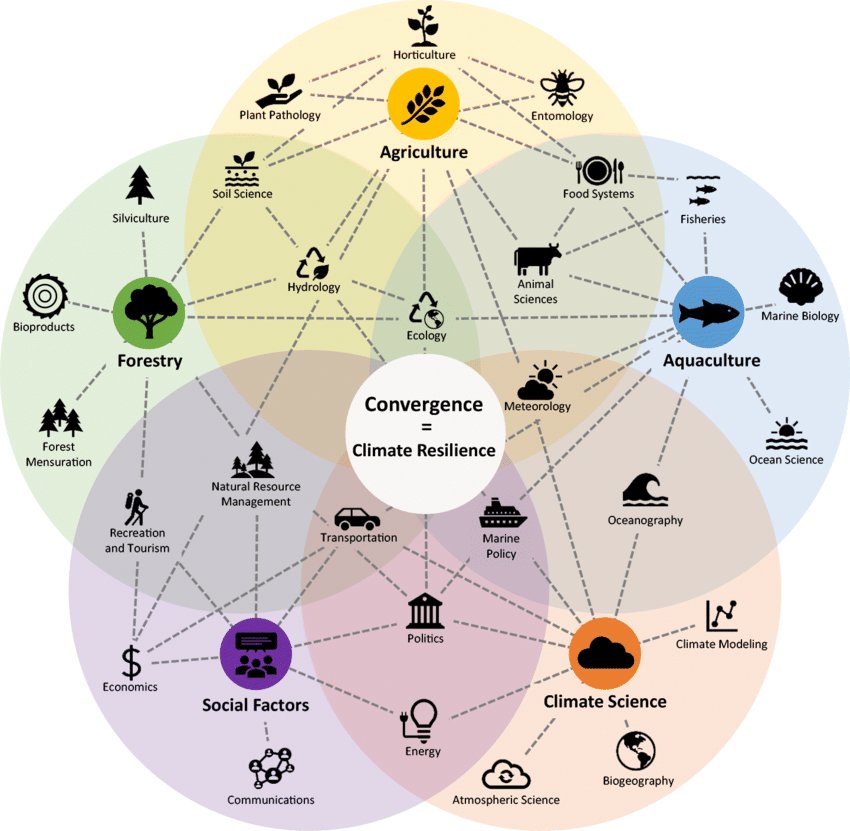
Convergence research is an approach aimed at tackling complex research problems, particularly those that address societal challenges. It is characterized by two main aspects:
Problem-Driven Focus
Convergence research is motivated by a specific, compelling problem, which could stem from fundamental scientific inquiries or urgent societal issues.
Cross-Disciplinary Integration
This approach emphasizes the deep integration of diverse disciplines, bringing together researchers from various fields to foster effective communication and collaboration. As experts work on a shared research challenge, their knowledge, theories, methods, data, and research communities begin to merge. This collaboration can lead to the development of new frameworks, paradigms, or even entirely new disciplines, as common approaches and a unified scientific language emerge.
Need for a convergent approach:
The research team clearly articulates the need to integrate significantly diverse science and engineering disciplines to tackle a specific scientific challenge or societal issue, highlighting why a convergent approach is essential.
Readiness to engage in convergence research:
The team demonstrates its preparedness to conduct the proposed research, showing that all relevant disciplines are represented. Evidence of this readiness may include past interdisciplinary projects, joint publications among team members, specialized expertise within the team relevant to the problem, or the co-development of research infrastructure.
Integration of knowledge, tools, and modes of thinking:
The team effectively showcases how the knowledge from its contributing disciplines is deeply integrated, with strong interconnections and mutual reinforcement of tools and techniques. The approach should be novel, illustrating a seamless blend of disciplines’ knowledge and ways of thinking to create a unified research methodology.
Involvement of the next generation of convergence researchers:
The project involves undergraduate students, graduate students, and postdoctoral fellows, providing them with opportunities to learn convergence research methods. The project should clearly outline the tools, techniques, and concepts outside their primary disciplines that they will be exposed to, ideally creating a model learning environment that can be replicated in other convergence research initiatives.